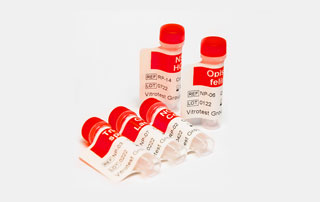
| Product description | The recombinant protein is an analogue of U90 antigen HHV6, expressed and derived from E.coli, affinity purified |
| Preservative | None |
| Storage | Frozen at -70 ˚C, avoid repeated freeze-thaw cycles |
HHV-6, or human herpes virus type 6, is the common name for a group that includes two different DNA viruses called HHV-6A and HHV-6B. Both members belong to the subfamily Betaherpesviridae. HHV-6 infection can have significant health consequences, especially regarding to the central nervous system and effects on the immune system. There is evidence that HHV-6 may act as a cofactor in the development of AIDS, some types of cervical carcinoma and nasopharyngeal cancer. Infection with HHV-6 usually occurs in early childhood, resulting in approximately 95% of adults having antibodies against the virus.
Diagnosis of HHV-6 often involves immunochemical and molecular biological methods such as PCR and hybridization. Detection of antibodies to HHV-6 in serum has become widely used, but serological methods cannot differentiate antibodies to HHV-6A and HHV-6B. Among serological approaches, enzyme immunoassay is the most common.
Vitrotest offers a recombinant protein that is an analogue of the native U90 HHV-6A antigen. U90 HHV6 promotes viral replication and cell-to-cell spread. Its functional domains include regions responsible for transcriptional activation, DNA binding, and interaction with cellular proteins. This protein is one of the markers of infection, and an immune response to it develops in most infected individuals.

