HSV2

Infections caused by herpes virus type 2 (HSV2) often result in genital lesions, characterized by painful sores. Differentiation between the two types of HSV is important because HSV-1 and HSV-2 are quite similar but cause different clinical manifestations and often have different sites of infection. Some people with HSV2 infection may experience fever, headaches, and swollen lymph nodes. After the initial infection, the virus remains dormant in nerve cells and can periodically reactivate, causing repeated outbreaks of genital herpes.
Important immunodominant components of the virus are glycoproteins gG and gD. gG is located in the viral envelope and is the main target of the immune system. gD is less immunogenic but plays a key role in virus attachment to cells. The use of native antigens in immunoassays often provides certain advantages due to increased sensitivity of the analysis.
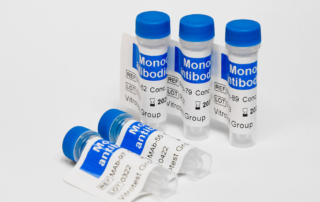
Monoclonal antibodies produced by Vitrotest are obtained against the native HSV2 antigen and are capable of reacting with herpes simplex virus type 2 antigens of different origins. The suitability of antibodies in ELISA has been confirmed by many years of experience. The use of a native antigen in the development of monoclonal antibodies provides high specificity and sensitivity due to the accurate reproduction of epitopes. Monoclonal antibodies to HSV2 can be used as a synthetic control or calibrator for immunoassays, which will replace the serum components of the test kit.

HSV2 monoclonal antibodies HV2

Product description        Murine monoclonal antibodies specific to HSV2 antigen
Isotype IgG1
Clone HV2
Buffer composition PBS, pH 7.2-7.4
Preservative BND
Storage 6 months at 2-8 ˚C , 24 months at -20±5 ˚C with 50 % glycerol
Go to Top