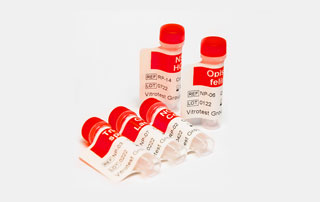
| Product description | The recombinant protein contains the HCV core immunodominant regions, expressed and derived from E.coli |
| Purification methods | Purified by affinity chromatography |
| Buffer composition | 50mM Tris-HCl, 100mM NaCl, 3M Urea, 300mM imidazole, pH8.0, 50% glycerol |
| Preservative | None |
| Storage | Frozen at -70 ˚C, avoid repeated freeze-thaw cycles |
HBV is a DNA virus of the Hepadnaviridae family. This virus causes hepatitis B, an infection that can lead to cirrhosis and liver cancer. The HBV virion has an outer lipoprotein envelope, which includes the surface antigen (HBsAg), and the icosahedral nucleocapsid is formed by the hepatitis B virus core antigen (HBcore).
HBsAg is responsible for the adsorption of the virus on the cell surface, consisting of small (S), medium (M) and large (L) proteins. HBsAg is the first serological marker and can be detected within 1-2 weeks after infection. This precedes the development of symptoms of viral hepatitis, which can appear after an average of 4 weeks. Determination of HBsAg in blood serum is the most common method for diagnosing viral hepatitis B. To detect this marker, a pair of monoclonal antibodies specific for HBsAg is most often used.
HBcore takes part in virus replication. During acute infection, anti-HBcore is detected predominantly of the IgM class, which may be the only marker in rare cases of HBsAg negative hepatitis B.
Vitrotest offers a very good quality recombinant antigen containing HBcore epitopes. The recombinant HBcore that we produce is very close in conformation to the native one, since in its purified form it is capable of forming virus-like particles. This antigen is suitable for use in ELISA and has been tested over many years.

