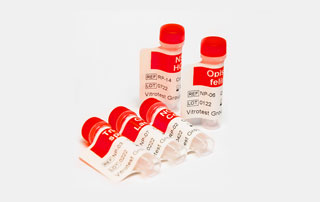
| Product description | The recombinant protein is an analogue of Multiple Banded Antigen (MBA) Ureaplasma spp., expressed and derived from E.coli |
| Purification methods | Purified by affinity chromatography |
| Preservative | None |
| Storage | Frozen at -70 ˚C, avoid repeated freeze-thaw cycles |
Ureaplasma spp. is the common name for a group of atypical bacterial pathogens of the class Mollicutes, consisting of closely related species U.urealyticum and U.parvum, previously considered biovars. The lack of a cell wall makes them unique among microbes. Ureaplasma spp. is a commensal organism that colonizes the human reproductive tract and is often accompanied by asymptomatic infection. On the other hand, these microorganisms can cause chorioamnionitis, neonatal infection, and urethritis. Also at risk are recipients after transplantation and surgical interventions. The most common approach to diagnosing ureaplasmosis is culturing in a selective diagnostic medium. A quick marker is the identification of nucleic acid by PCR. Detection of antibodies to ureaplasma can be an additional method in complex diagnostics and valuable in the context of studying the history of human diseases.
To develop serological tests, antigens from Ureaplasma spp. are used. MBA (Multiple Banded Antigen), a surface high-molecular lipoprotein, is most often used. This protein is involved in adhesion processes and is immunogenic with high homology in both types of uraeplasma. The C-terminal region of the protein exhibits pronounced antigenic properties, which are mainly associated with the synthesis of antibodies to this region. The immune response to MBA has much in common for both types of ureaplasma, which does not always require clear differentiation.
Vitrotest offers a recombinant protein derived from E. coli, an analog of Ureaplasma spp. MBA, containing immunodominant epitopes.

